The great irony of gemstones: in the rough, most look like ordinary gravel. Miners have tossed fortunes onto spoil heaps because raw gemstones don't sparkle — cutting and polishing creates that. What raw stones do have are structural tells you can learn to spot.
Field signs of a raw gemstone
- Crystal form. Gem minerals grow in geometric shapes: corundum (ruby, sapphire) forms hexagonal barrels, garnet forms ball-like dodecahedra, topaz and tourmaline form striated prisms. Geometry in a pebble is a big clue.
- Weight in the hand. Many gems are denser than common quartz — a stone that feels heavy for its size deserves a second look.
- Hardness. Corundum (Mohs 9) and topaz (Mohs 8) scratch quartz and glass effortlessly. A gem candidate should resist scratching, not crumble.
- Wet-look luster. Rough diamond has a greasy shine; rough opal shows glassy patches; beryl looks vitreous even uncut.
- Color hints under the crust. Chip-sized windows or wet surfaces often reveal the internal color of a rough ruby, emerald or amethyst.
The look-alike problem
Every valuable rough stone has cheap doubles: red garnet passes for ruby, iron-stained quartz for citrine or topaz, colored glass slag for almost anything. Visual inspection alone — especially for beginners — misidentifies constantly. This is exactly where AI photo identification earns its place in your rockhounding kit: it weighs color, luster, texture and crystal habit simultaneously against a reference library far larger than any field guide.
Identify a raw gemstone with Mineral Identifier AI
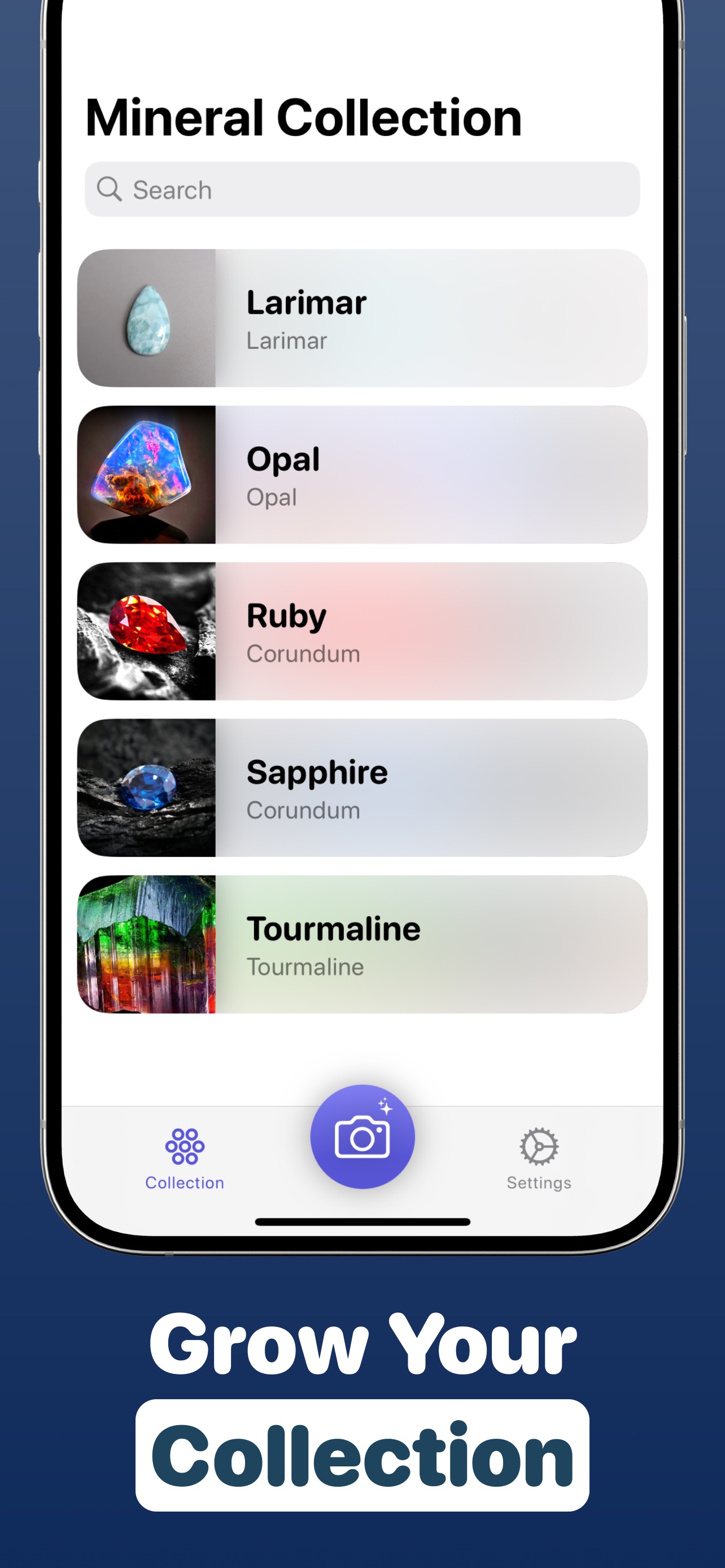
- Get Mineral Identifier AI free on your iPhone — it works in the field, right where you find the stone.
- Rinse or wet the stone if you can; a wet surface shows true color and luster.
- Scan with the camera zoom to capture crystal faces, striations and any color windows up close.
- Read the ID: mineral name, hardness, crystal system and classification — enough to separate corundum from quartz on the spot.
- Check the estimated value and ask Rocksy, the in-app assistant, follow-ups like "how can I confirm this is a real sapphire?" or "where is this usually found?"
What to do if it looks like the real thing
If a scan points to a genuine gem mineral: stop improving it. Don't tumble, grind or "test-scratch" a potentially valuable rough stone. Record where you found it (locality affects value), keep the scan in your app collection as a record, and have the stone verified by a gemologist before selling. Rough gem material is priced per carat and mistakes in handling are expensive.