Rock collecting (rockhounding) may be the most accessible hobby on Earth — the specimens are literally everywhere and free. What separates a collection from a pile is identification and organization. Modern tools make both dramatically easier than they were even five years ago.
Step 1: Find your first specimens
- Start local: creek beds, beaches, gravel bars, road cuts and freshly plowed fields expose the most varied material.
- Visit pay-to-dig sites and mines: many old mines let visitors keep what they find — a shortcut to quality specimens.
- Gem & mineral shows: great for filling gaps in your collection cheaply and meeting local collectors who know the good spots.
- Know the rules: collecting is generally fine on most public lands for personal use, but national parks and private property are off-limits without permission.
Step 2: Identify everything you keep
An unidentified rock teaches you nothing and is worth nothing to trade. Identification used to be the hobby's steepest learning curve — streak plates, hardness kits, dichotomous keys. Today you can photograph a find where it lies and know its name before it's in your pocket.
Build your collection with Mineral Identifier AI
- Download Mineral Identifier AI free — it becomes your field kit, reference library and catalog in one.
- Scan each find to identify it: name, chemical formula, hardness, crystal system and estimated value.
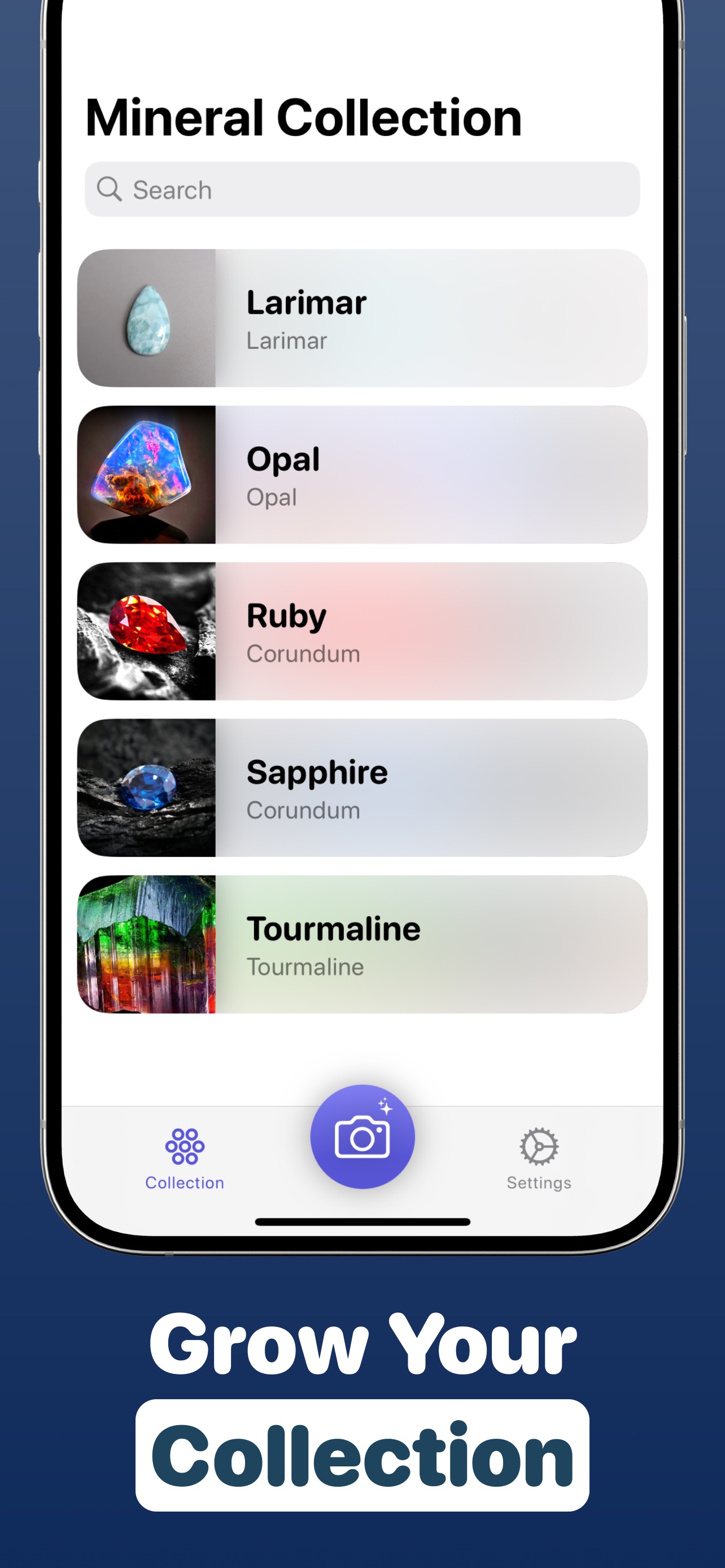
- Save the scan to your Mineral Collection — the app keeps a photo, the full profile and value for every specimen.
- Search your collection anytime: it's fully searchable, so "that blue one from the beach trip" is two taps away.
- Learn as you go: ask Rocksy where each mineral typically forms — it's how you figure out what else your local sites might hold.
Step 3: Store and display like a collector
- Label physically, catalog digitally. A small numbered sticker on each specimen linking to its entry in your app collection is the classic museum method, minus the index cards.
- Record the locality. Where a specimen was found is half its story (and much of its value). Note it when you save the scan.
- Protect the fragile ones. Soft minerals (selenite, calcite) scratch easily — keep them separated in compartment boxes.
- Display the best, store the rest. A printer-paper box holds a surprising amount of gravel; your shelf should hold only what makes visitors ask questions.
Step 4: Level up
Once the collecting bug bites, pick a specialty — one mineral family, one region, fluorescent minerals, micro-crystals. Specialists build more interesting collections and trade better. Your app collection doubles as a want-list: the minerals you haven't scanned yet are the map of where the hobby goes next.